Google Documents 12 More Crawlers and Explains Google-Extended
On 23 November 2026 Google added 12 existing crawlers and fetchers, including pageburst for Google Ads landing page checks, to its crawling documentation. A day later it published a standalone Google-Extended page. Here is what changed and what to check in your logs, firewall and robots.txt.
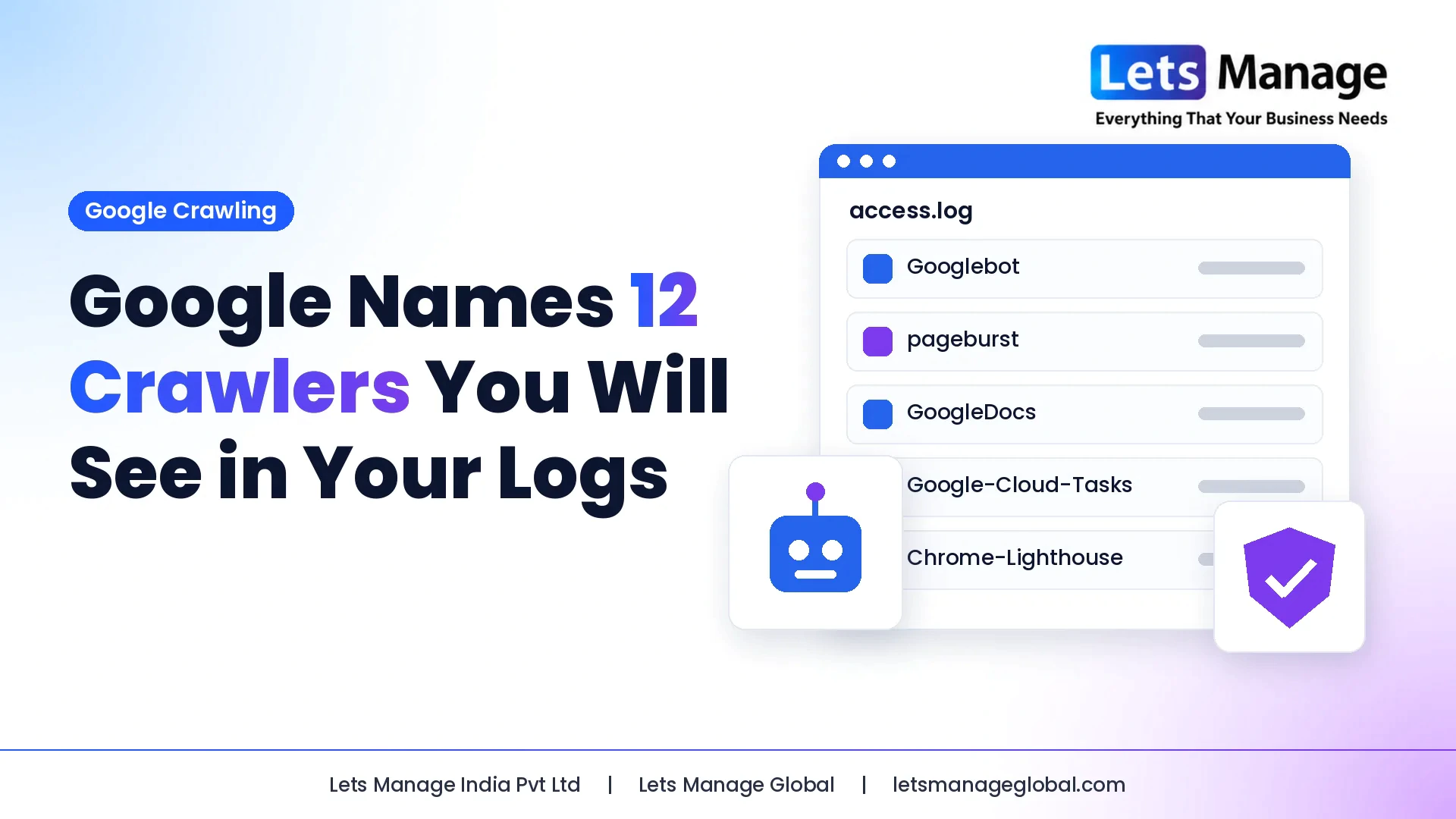
In brief. On 23 November 2026 Google documented 12 existing crawlers and fetchers that often appear in server logs. Six special-case crawlers, including pageburst for Google Ads landing page checks and GoogleDocs for Sheets imports, and six user-triggered fetchers, including Chrome-Lighthouse and GoogleImageProxy. All of them ignore robots.txt. Google also moved APIs-Google to the user-triggered list and fixed its user agent string. On 24 November it published a page explaining that Google-Extended is a robots.txt token, not a separate crawler, and does not affect Search ranking.
What has changed?
Google has added 12 crawlers and fetchers to its official crawling documentation. According to the crawling documentation changelog, the update went live on 23 November 2026. Google is clear that none of these clients are new. They are existing, high-volume requesters that site owners keep finding in their server logs and asking about.
A day later, on 24 November, Google also published a standalone page explaining how the Google-Extended product token works. Together, the two updates give website owners, developers and hosting teams a clearer map of which Google requests they are seeing and which robots.txt rules those requests actually follow.
Six special-case crawlers added
Google's special-case crawlers page now lists six more user agents. Google says special-case crawlers work for specific products where there is an agreement between the site and the product, and that they may ignore robots.txt. All six new entries are documented as ignoring robots.txt.
- Google-analytics-postbacks sends attribution postbacks from Google Analytics to configured ad network endpoints when conversion events happen.
- Google-Calendar-Importer fetches and refreshes external .ics calendar feeds that Google Calendar users subscribe to.
- GoogleDocs powers Google Sheets functions that pull data from web URLs, such as IMPORTHTML.
- Google-Edu verifies institutional domains submitted by administrators applying for Google Workspace for Education.
- pageburst renders web pages for Google Ads quality, landing page safety and page understanding.
- PlayStore-Google fetches and validates URLs that developers submit in Google Play Store listings.
The pageburst entry is the one most marketing teams should note. If you run Google Ads, a request with pageburst in the user agent is likely Google checking your landing page. Google says it is unaffected by crawling preferences, so a robots.txt rule will not stop it, and if a firewall blocks it, Google cannot render the landing page it is trying to check.
Six user-triggered fetchers added
The user-triggered fetchers page gained six entries. These are requests started by a person using a Google product, so Google says they generally ignore robots.txt.
- AppEngine-Google is added to requests from apps on the App Engine standard environment that use the URL Fetch service.
- Google-Apps-Script fetches external URLs and APIs on behalf of scripts built in Google Workspace.
- Google-Cloud-Tasks sends scheduled and asynchronous HTTP requests and webhooks set up by developers.
- GoogleImageProxy fetches images embedded in emails and documents when someone opens them, for example in Gmail.
- Google Web Preview fetches pages to build link preview thumbnails in products such as Google Classroom.
- Chrome-Lighthouse fetches pages when someone runs an audit in PageSpeed Insights.
Google also moved APIs-Google from the special-case list to the user-triggered list. Its webhook push requests come from the user-triggered fetcher IP ranges and ignore robots.txt. Google corrected a typo in that user agent string at the same time, adding a missing semicolon. If your code matches the old string exactly, Google advises updating it to avoid bugs.
Google-Extended now has its own page
The new Google-Extended page clears up a common misunderstanding. There is no separate Google-Extended crawler. Googlebot, GoogleOther and other training and grounding related crawlers record a page's Google-Extended status when they crawl it, and Google applies that status later.
Disallowing Google-Extended in robots.txt limits use of your content for training future foundation models and for grounding in Google generative AI products outside Search. Google says it does not affect inclusion in Google Search and is not a ranking signal. It also does not control AI Overviews or AI Mode. For those, Google points to the Search generative AI control in Search Console. Google adds that it intends to support a shared machine-readable training preference signal in early 2027.
Who should pay attention
- Developers and hosting teams who manage firewalls, CDNs and bot protection rules.
- Advertisers whose landing pages sit behind strict bot filters.
- Businesses that use Google Sheets, Apps Script or Cloud Tasks to talk to their own sites or APIs.
- Publishers deciding how their content can be used for AI training.
- Anyone whose analytics or server logs show unexplained Google traffic.
What businesses should do now
1. Check your bot rules against the new lists. Make sure your firewall or CDN is not blocking pageburst, AdsBot or other Google clients your marketing depends on.
2. Verify before you trust. Google warns that user agent strings can be spoofed. Its verification guide explains how to confirm a request with a reverse and forward DNS lookup or by matching the published IP range files.
3. Do not rely on robots.txt for these clients. Every newly listed client ignores robots.txt. If something is private, protect it with authentication, not a disallow rule.
4. Fix hardcoded user agent strings. Search your code and WAF rules for the old APIs-Google string and update it.
5. Review your Google-Extended decision. Decide whether you want to allow AI training use, and remember it is a separate choice from AI Overviews visibility.
Our view
This is housekeeping, not a ranking change, but it is useful housekeeping. Many sites block unfamiliar Google traffic by accident or let fake Googlebots through because nobody can tell them apart. A clear, official list makes it easier to write sensible rules.
Our technical SEO team and website development team can review your server logs, bot rules and robots.txt together. If you would like a hand, talk to us.
What to do now
Use these steps to act on Google's updated crawler documentation.
-
Compare your bot rules.
Check firewall, CDN and bot protection rules against Google's updated crawler and fetcher lists.
-
Allow ad checks.
Make sure pageburst and AdsBot can reach your Google Ads landing pages.
-
Verify requests.
Confirm Google traffic with reverse and forward DNS or the published IP range files.
-
Protect private content properly.
Use authentication, because these clients ignore robots.txt.
-
Update hardcoded strings.
Replace the old APIs-Google user agent string in code and WAF rules.
Questions and answers
Which crawlers did Google add to its documentation?
Special-case crawlers Google-analytics-postbacks, Google-Calendar-Importer, GoogleDocs, Google-Edu, pageburst and PlayStore-Google, and user-triggered fetchers AppEngine-Google, Google-Apps-Script, Google-Cloud-Tasks, GoogleImageProxy, Google Web Preview and Chrome-Lighthouse.
Are these new Google crawlers?
No. Google says they are existing high-volume clients that are likely to show up in server logs and that it has received questions about.
What is pageburst?
Google says the pageburst user agent renders web pages for Google Ads quality, landing page safety and page understanding. It ignores robots.txt and is unaffected by crawling preferences.
Can I block these crawlers with robots.txt?
No. Google documents every newly listed client as ignoring robots.txt. Use authentication for content that must stay private.
Does blocking Google-Extended hurt my Google rankings?
Google says Google-Extended does not affect inclusion in Google Search and is not used as a ranking signal. It also does not control AI Overviews or AI Mode, which have a separate control in Search Console.
How do I know a request is really from Google?
Run a reverse DNS lookup on the IP, check the hostname is on googlebot.com, google.com or googleusercontent.com, then run a forward lookup to confirm it matches. You can also match IPs against Google's published range files.
Sources
- Google Crawling Infrastructure, Google's crawling documentation changelog, 23 and 24 November 2026
- Google Crawling Infrastructure, Google special-case crawlers, 23 November 2026
- Google Crawling Infrastructure, Google user-triggered fetchers, 23 November 2026
- Google Crawling Infrastructure, How the Google-Extended product token works, 24 November 2026
- Google Crawling Infrastructure, Verify requests from Google crawlers and fetchers, 23 November 2026
Checked by the Lets Manage Global team. Last updated 26 Nov 2026.